How Much Should Your Emergency Fund Be? Find Your Number in 5 Steps
Not a vague "3 to 6 months": a number worked out from your own essential bills.
The usual advice is "3 to 6 months of expenses". The useful part is which expenses: only the essentials you would still pay if your income stopped tomorrow.
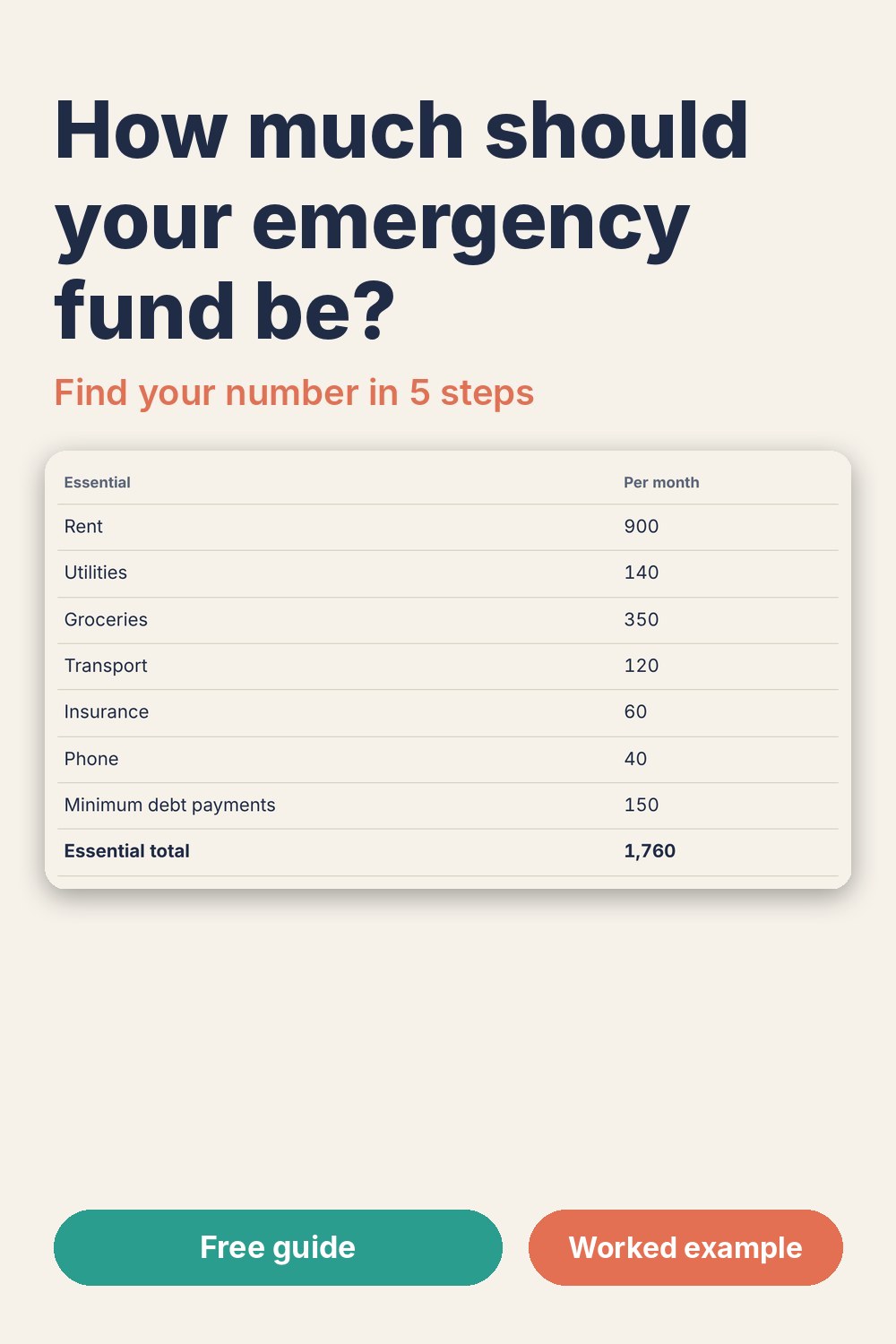
Step 1: add up your essential monthly costs
| Essential | Per month |
|---|---|
| Rent | 900 |
| Utilities | 140 |
| Groceries | 350 |
| Transport | 120 |
| Insurance | 60 |
| Phone | 40 |
| Minimum debt payments | 150 |
| Essential total | 1,760 |
Leave out eating out, subscriptions and holidays. In an emergency those stop first.
Step 2: choose how many months
| Cover | Target | Who it often suits |
|---|---|---|
| Starter | 1,000 | Anyone with no savings yet: get here first |
| 3 months | 5,280 | Stable job, two incomes in the household |
| 6 months | 10,560 | Single income, self-employed, or irregular pay |
Step 3: work out how long it will take
Saving €250 a month, the €1,000 starter takes 4 months and 3 months of cover (5,280) takes 22 months. That feels slow, which is why milestones help: celebrate 1,000, then one month, then three.
Step 4: keep it separate and only use it for emergencies
A separate savings account you don't see every day works best. Car repairs and Christmas are not emergencies; they belong in sinking funds.
Step 5: refill after you use it
When you take money out, pause other extra savings and top it back up first.
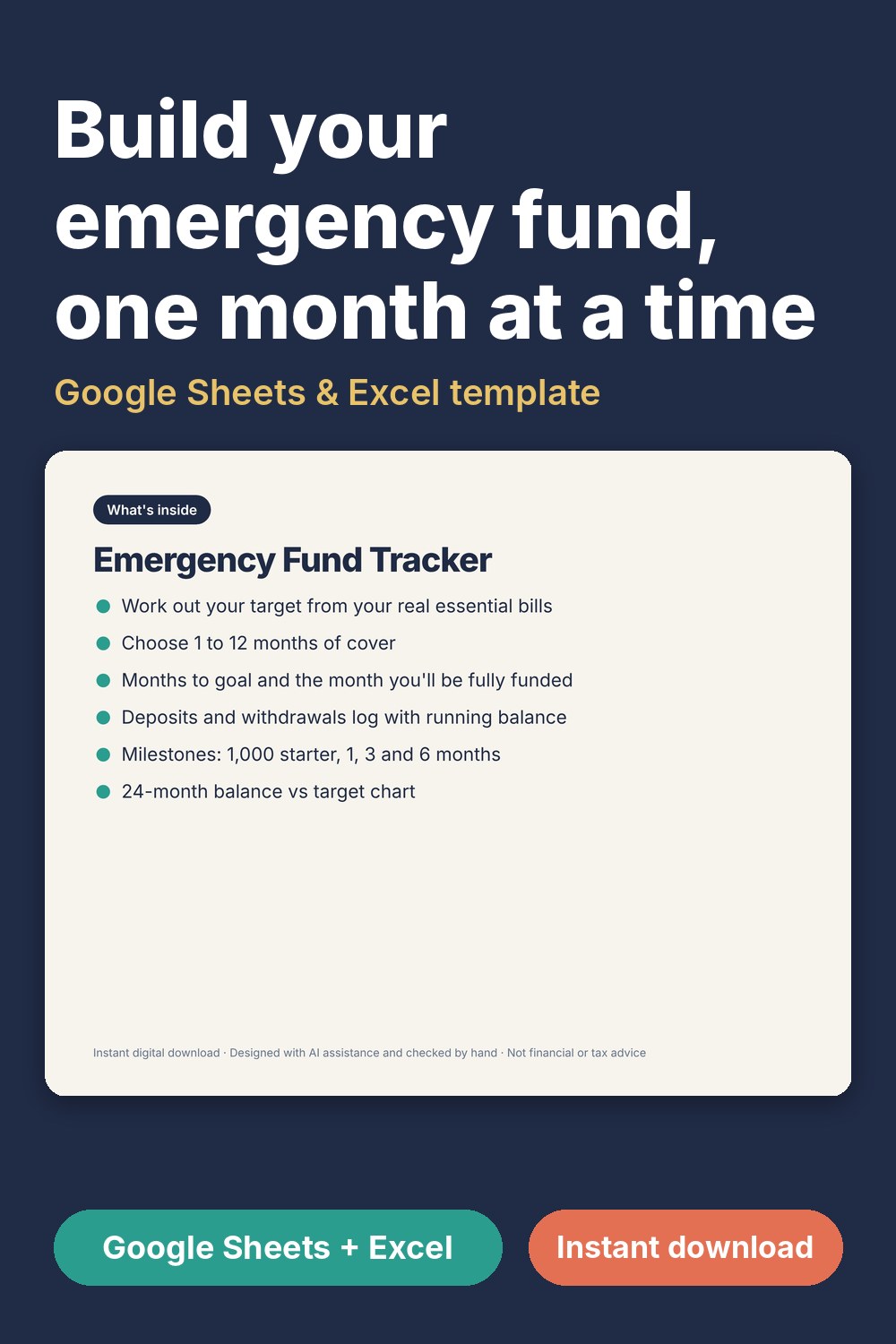
Get the Emergency Fund Tracker on Etsy
Saving for something specific? The free sinking fund calculator shows how much to set aside each month.
Get the 2027 money sheet deals by email
We'll tell you when our budget, debt and savings spreadsheets are on sale (up to 30% off from 27 November), plus one money tip now and then. Unsubscribe anytime.
Questions
How much should an emergency fund be?
A common target is 3 to 6 months of essential expenses. Start with a 1,000 starter fund, then build to full cover.
Should I pay off debt or build an emergency fund first?
Many people build a small starter fund first so a surprise bill doesn't go on a card, then focus on debt, then finish the full fund.
Where should I keep my emergency fund?
In a separate, easy-access savings account that you don't use for day-to-day spending.
Updated 22 November 2026. A planning guide, not financial or tax advice.